AI's Growing Role and the impact of Regulation
Artificial intelligence is revolutionizing industries worldwide, driving innovation and improving efficiency. However, as AI becomes more powerful, its potential risks must also be addressed. To ensure AI systems uphold fundamental rights and user safety, the European Union has introduced the AI Act, imposing strict requirements on AI use.
One of the key elements of the EU AI Act is Article 5, which prohibits certain AI practices deemed high-risk. These prohibitions came into force on February 2, 2025, and organizations must ensure compliance to avoid legal and financial penalties.
Prohibited AI Systems Under the EU AI Act
1. Subliminal Manipulation Techniques
- AI systems using subliminal influence, intentional manipulation, or deception to alter human behavior.
- Exception: Legitimate medical or psychological treatment and lawful business practices.
- Example: Brain-computer interfaces designed to covertly influence user decisions.
2. Exploitation of Vulnerabilities
- AI systems targeting individuals based on age, disability, or socio-economic status, leading to significant behavioral changes or harm.
- Exception: Common and lawful business practices.
- Example: AI exploiting social isolation or language barriers to manipulate decisions.
3. Social Scoring
- AI systems evaluating personal behavior or characteristics to determine access to services, leading to unjustified discrimination.
- Example: Assigning social scores that impact access to education or public services based on political affiliation.
4. Emotion Recognition in Work & Education
- AI systems used to infer emotional states in workplaces and educational institutions.
- Example: Affective computing used to assess employee performance based on emotional responses.
5. Biometric Categorization
- AI inferring sensitive attributes such as race, political opinion, trade union membership, religion, or sexual orientation.
- Example: AI categorizing individuals’ political views based on clothing or tattoos.
6. Predictive Policing & Risk Assessment
- AI systems used for criminal risk assessment based solely on profiling (as defined by GDPR).
- Example: Law enforcement using AI-generated risk scores without any additional evidence.
7. Creation of Facial Databases
- AI systems collecting facial images indiscriminately from the internet or surveillance footage.
- Example: AI scraping online images to create a massive facial recognition database.
8. Real-Time Remote Biometric Identification
- AI used for biometric surveillance in publicly accessible areas.
- Exception: Law enforcement use in targeted cases, such as missing persons investigations or serious criminal tracking.
Why This Matters
🔹 Protects against coercion, discrimination, and mass surveillance
🔹 Reinforces fundamental rights and ethical AI practices
🔹 Establishes a global benchmark for trustworthy AI
Consequences of Non-Compliance
Failure to comply with Article 5 of the EU AI Act carries severe penalties:
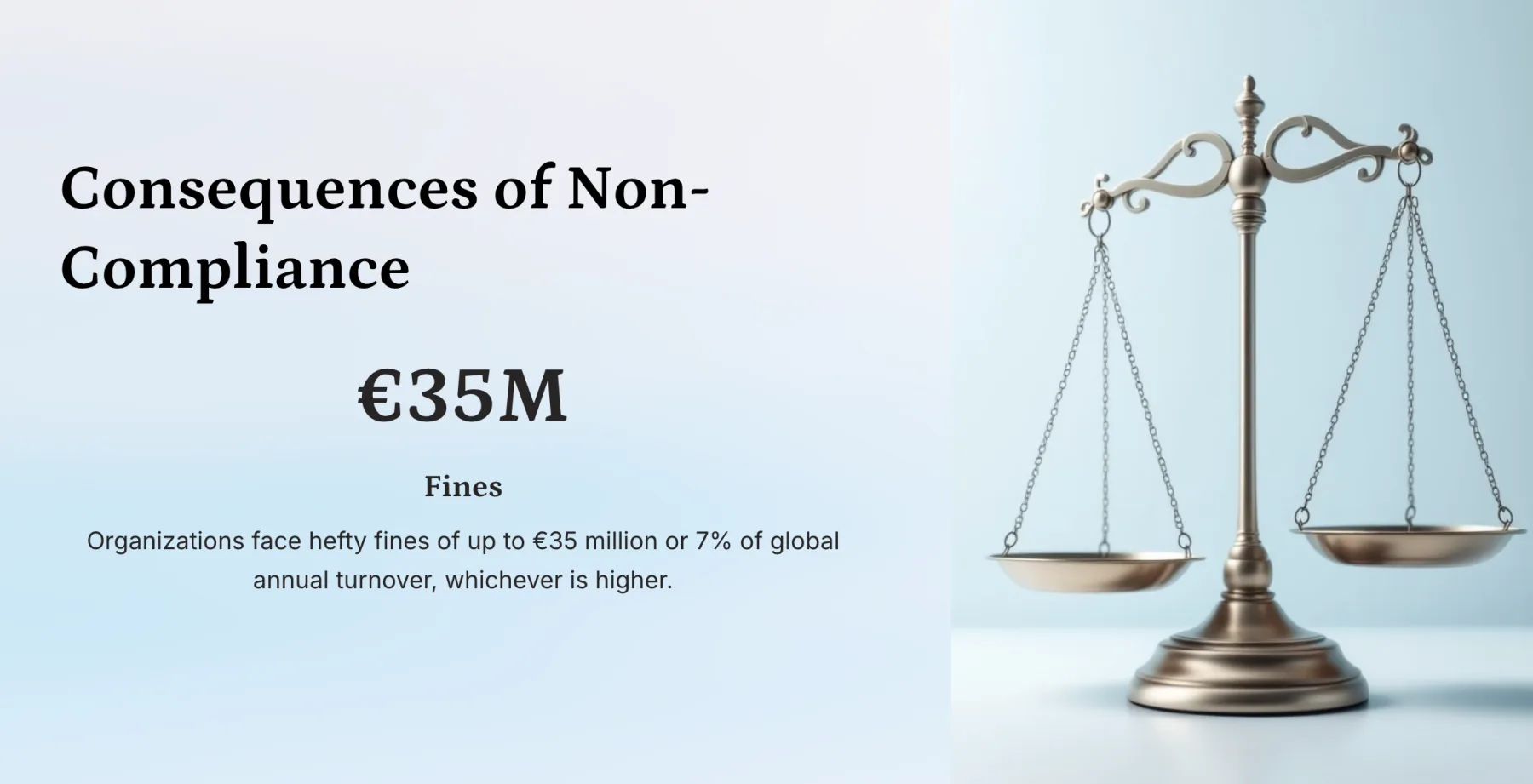
- Fines up to €35 million or 7% of global annual turnover, whichever is higher.
- These penalties are stricter than those for violations related to high-risk AI systems.
Infringements
Violations of the prohibition of banned AI systems under Article 5 of the EU AI Act will be punished more severely than breaches related to 'high-risk AI.'
- Fine for high-risk AI violations: Up to €15 million or up to 3% of global annual turnover.
- Fine for prohibited AI violations: Up to €35 million or up to 7% of annual global turnover, whichever is higher.
What’s Next for Organizations?
Organizations that develop or deploy AI must take immediate action to assess and eliminate prohibited AI practices. Ensuring compliance not only avoids financial and reputational risks but also aligns AI development with ethical and regulatory standards.
Need expert guidance on AI compliance? Book a consultation today → https://gottdata.com/contact
📩 For more insights on AI regulations, contact us at contact@gottdata.com or follow us for updates.
#EUAIAct #AIRegulation #ResponsibleAI #EthicalAI #TrustworthyAI
Note: This publication is not intended to constitute legal advice. For more information, please check https://artificialintelligenceact.eu/