Read about our impactful predictive maintenance project with Buff - Use case
In today’s fast-paced, data-driven world, businesses are under increasing pressure to maximize efficiency and minimize downtime. Traditional maintenance approaches—such as reactive or scheduled maintenance—often fall short when it comes to keeping operations running smoothly. That's where predictive maintenance (PdM) powered by artificial intelligence (AI) comes in, offering a smarter, more proactive solution to managing equipment and infrastructure. Predictive maintenance uses AI algorithms, data analytics, and Internet of Things (IoT) sensors to monitor the health of machinery and predict potential failures before they happen. This shift from reactive to proactive maintenance is revolutionizing industries by preventing costly breakdowns, improving safety, and optimizing resource usage. In this blog, we’ll explore how AI is transforming predictive maintenance across a variety of sectors, and highlight some of the most impactful use cases.
What is Predictive Maintenance and How does AI power it?
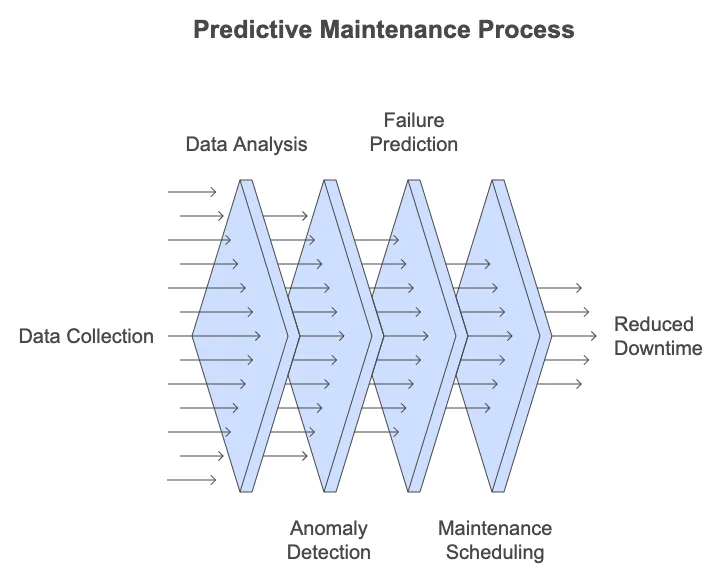
At its core, predictive maintenance is about using data to predict when equipment is likely to fail and performing maintenance just in time to avoid disruption. Traditionally, maintenance was based on fixed schedules or reactive approaches where equipment was repaired only after it broke down. Predictive maintenance flips this on its head, allowing organizations to monitor assets in real-time, collect relevant data, and predict failure points before they lead to unplanned downtime. AI plays a pivotal role in this transformation. By analyzing massive volumes of data from IoT sensors and historical maintenance records, AI algorithms can detect patterns, identify anomalies, and predict potential failures with incredible accuracy. The AI models "learn" from past data to improve their predictions, continuously fine-tuning to provide increasingly accurate forecasts for when equipment needs attention.
Use cases of AI-Powered Predictive Maintenance Across Industries
Manufacturing In manufacturing, machines such as pumps, motors, and conveyor belts are critical to production. Unplanned downtime can lead to significant losses. With AI-powered predictive maintenance, sensors can monitor factors like vibration, temperature, and pressure in real-time. AI analyzes this data to predict when parts are likely to wear out or fail. For instance, by predicting when a motor’s bearings are about to fail, maintenance teams can intervene before it disrupts production, minimizing downtime and costly repairs. AI also helps manage spare parts inventory by predicting which components are most likely to need replacing and automating the ordering process.
Energy & Utilities The energy sector is one of the biggest beneficiaries of predictive maintenance. Power plants, wind farms, and utilities rely heavily on complex machinery—such as turbines, transformers, and generators—that must run efficiently to avoid costly outages. Predictive maintenance helps monitor the health of these systems, with AI models analyzing data from vibration sensors, temperature readings, and electrical signals. For example, wind turbines equipped with IoT sensors can detect early signs of mechanical failure, such as imbalances in rotor blades or gearbox wear. AI-powered PdM systems can predict these failures before they result in costly downtime, allowing for timely interventions that keep the turbines running efficiently. ####
Aerospace & Aviation In aviation, predictive maintenance is essential to maintaining safety and avoiding unplanned disruptions. AI-driven systems monitor critical components of aircraft—such as engines, landing gear, and avionics—to predict maintenance needs. By analyzing data from sensors embedded in engines and flight systems, AI can detect anomalies like unusual vibrations or temperature fluctuations, signaling when a component is at risk of failure. Predictive maintenance in aviation doesn’t just prevent unplanned breakdowns; it also optimizes flight schedules, reduces turnaround times, and minimizes the need for costly emergency repairs, contributing to better safety and efficiency across the industry.
Automotive Predictive maintenance is increasingly being used in the automotive sector, especially with the rise of connected vehicles. In fleet management, AI monitors the health of vehicles by analyzing data from sensors embedded in engines, tires, and braking systems. For example, predictive maintenance systems can detect when tires are losing pressure or when brakes are nearing the end of their life, alerting fleet managers to address the issues before they cause a breakdown. In the case of electric vehicles (EVs), AI helps monitor battery health, charging patterns, and motor performance, predicting issues before they impact performance. By addressing maintenance needs proactively, companies can maximize fleet uptime and reduce operating costs.
Oil & Gas The oil and gas industry deals with high-value assets and equipment in harsh, remote environments, making downtime particularly costly. Predictive maintenance uses AI to monitor drilling rigs, compressors, pumps, and pipelines. By analyzing real-time sensor data such as pressure, temperature, and vibration, AI can predict when parts will wear out, preventing major failures. For example, AI models can detect early signs of equipment failure in offshore oil rigs, where maintenance may be difficult and expensive. This allows technicians to take preventative actions before the equipment fails, ensuring both the safety of workers and the continuity of operations.
Healthcare In healthcare, predictive maintenance helps ensure that critical medical devices—such as MRI machines, infusion pumps, and ventilators—are always operational. By continuously monitoring device performance and usage patterns, AI can predict when a device is likely to fail or require maintenance, allowing healthcare providers to schedule repairs before equipment goes offline. This capability is particularly crucial in hospitals, where uptime is vital to patient care. Predictive maintenance in medical facilities also extends to building systems like elevators and HVAC, ensuring that critical infrastructure is always functional and reducing costly repairs.
Food & Beverage In the food and beverage industry, maintaining production efficiency is crucial to meeting demand while ensuring safety and quality. Predictive maintenance is used to monitor machinery such as mixers, conveyors, and refrigeration systems. AI-driven systems can predict when equipment might fail, preventing disruptions in production that could lead to spoilage or contamination. For instance, in cold storage, AI sensors can monitor temperature fluctuations and detect when refrigeration units are underperforming, triggering maintenance before it affects the stored goods. This ensures the quality of the products while reducing waste and operational costs.
Mining Mining operations rely heavily on expensive, heavy machinery, including haul trucks, excavators, and crushers. Predictive maintenance helps track the condition of these machines, with AI analyzing vibration, temperature, and performance data to predict wear and tear. By identifying issues before they cause breakdowns, mining companies can extend the lifespan of their equipment and avoid costly downtime in harsh environments. AI-powered PdM systems can also predict failures in conveyor belt systems, a critical part of material transport in mining operations, reducing the risk of unexpected halts and improving overall efficiency.
Benefits of AI-Driven Predictive Maintenance
AI-powered predictive maintenance offers a wide range of benefits across industries:
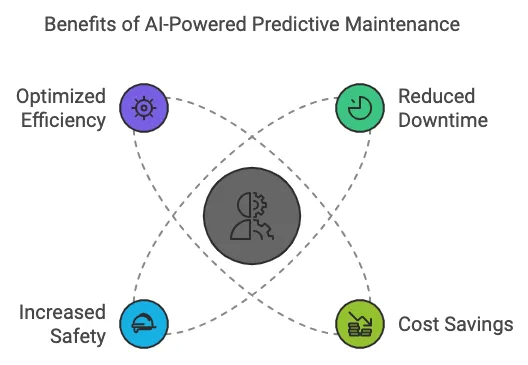
Reduced Downtime: By predicting failures before they occur, businesses can perform maintenance at the optimal time, minimizing unplanned downtime and keeping operations running smoothly.
Cost Savings: Proactive maintenance reduces the need for emergency repairs and extends the lifespan of equipment, saving money on both direct repair costs and indirect costs like lost production.
Increased Safety: Early identification of potential failures prevents accidents, improves worker safety, and helps ensure the reliability of critical infrastructure.
Optimized Efficiency: AI ensures that machines are maintained at the right time, not too early and not too late, helping to maximize their operational lifespan and overall performance.
The future of Predictive Maintenance with AI
As AI continues to evolve, the potential applications for predictive maintenance will only grow. With advances in machine learning, data analytics, and IoT technology, businesses will be able to gather even more granular insights into their equipment’s health, driving even more precise predictions and enhancing overall efficiency. Predictive maintenance is no longer a luxury; it's becoming a necessity for organizations seeking to stay competitive in an increasingly dynamic marketplace. In conclusion, AI is not just transforming predictive maintenance—it’s reshaping how industries approach operations and asset management. By adopting AI-powered predictive maintenance, businesses can enhance operational efficiency, reduce costs, and increase the longevity of their assets, all while improving safety and reliability. If you haven't yet explored predictive maintenance for your business, now is the time to start. The future is proactive, and AI is leading the way.
For more information:
Let us demo our products for you: Contact Sales
🔗 Connect with us:
www.linkedin.com/company/gott-data/
📖 Browse our blog posts to learn more about strategies for your business: Blogs
⚓ Explore how we can help you with your Data Foundation or Advanced Analytics needs: https://gottdata.com/services
📟 Contact us: https://gottdata.com/contact
📖 Contribute to our research: https://research.gottdata.is/contact