Buff Predictive Maintenance
A model that flags machine failures before they happen, so Buff's maintenance team fixes the critical machines first.
- Client
- Original Buff · Spain
- Role
- Project lead: Desh Deepak
- Year
- 2024
- Practice
- Data
At a glance
- Client
- Original Buff · Spain
- Starting point
- Recognizing the critical need for proactive maintenance, we initiated a project to develop a custom predictive maintenance model.
- What we built
- A model that flags machine failures before they happen, so Buff's maintenance team fixes the critical machines first.
- Focus
- Machine learning, MLOps, Predictive maintenance
- Outcome
- This has transformed their role from reactive troubleshooters to strategic planners.
- Location: Igualada, Spain
- Project Lead: Desh Deepak
- Project type: Advanced Analytics, Machine Learning, Narrow AI, MLOps
- Project Client: Buff
- Market: Spain, EMEA
Background
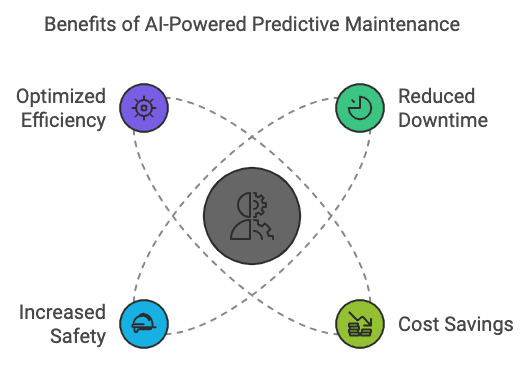
In today's fast-paced industrial environment, unplanned downtime due to equipment failure can severely impact productivity and profitability. Recognizing the critical need for proactive maintenance, we initiated a project to develop a custom predictive maintenance model. By combining our expertise in both business operations and technical solutions, we sought to enable Buff to predict and prevent machine failures before they happen, thereby reducing downtime and optimizing operational efficiency.
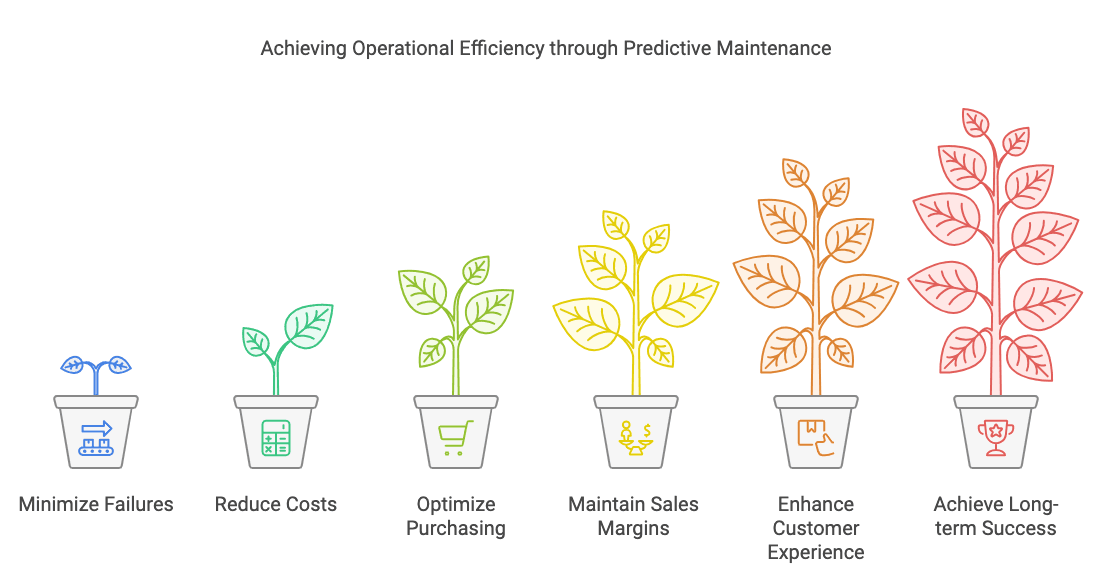
This initiative also brings significant cross-functional benefits. By minimizing unexpected failures, it not only reduces maintenance and repair costs but also optimizes purchasing processes for raw materials. Furthermore, it helps maintain sales margins by preventing delays in shipping, which can force the company to split shipments into multiple boxes over different dates, leading to increased logistics costs and decreased customer satisfaction. Our approach ensures a seamless alignment of operational efficiency, cost savings, and customer experience, all contributing to Buff's long-term success.
Objective
The primary objective of the predictive maintenance project was to develop a robust solution that predicts and flags machine failures in advance, enabling Buff to implement proactive maintenance measures and avoid costly downtime. Additionally, we aimed to adapt the predictive maintenance algorithm to the GEMBA methodology, identifying the most critical machines in the production process and prioritizing maintenance efforts accordingly.
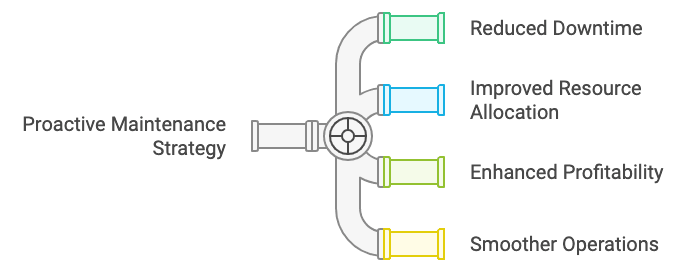
At the heart of this initiative is the goal of empowering the maintenance team. Instead of spreading their efforts thinly across all machinery, the team can now focus on preventing failures in critical machines that could result in significant downtimes. This shift from reactive to proactive maintenance allows for more efficient resource allocation, reducing downtime's ripple effects across the production line.
The production process at Buff is inherently complex, involving several stages and numerous product types. Many products share overlapping dependencies on the same machines, adding to the operational intricacy. A significant delay caused by machinery downtime in one area can cascade across multiple production steps, disrupting schedules and impacting several business lines. Such delays can also lead to missed deadlines for customer orders, forcing costly logistics decisions like splitting shipments across multiple dates and packages, which further erode sales margins.
By enabling a more focused and efficient approach to maintenance, this predictive model not only ensures smoother production operations but also protects Buff's profitability across its diverse product offerings and complex supply chains.
Scope
The scope of the project spanned from conceptualization to implementation, encompassing data acquisition, algorithm development, and deployment of MLOps. Key components included the extraction, transformation, and loading (ETL) of three years' worth of historical data, development of the predictive maintenance algorithm, and integration with existing systems for real-time monitoring. Additionally, the adaptation of the algorithm to GEMBA methodology involved identifying key machines and predicting failures specific to these machines.
To achieve this, the scope of the project extended beyond just predictive modeling. It included comprehensive data analysis to uncover insights about machinery failure behavior. By examining patterns in machine usage, environmental conditions, and historical failure data, we gained a deeper understanding of the factors contributing to machine downtimes. This analysis enabled us to target the root causes of failures and refine our predictive algorithms for greater accuracy.
Another critical aspect of the project was the integration of Overall Equipment Effectiveness (OEE), a key metric that measures how effective and efficient each machine is. OEE considers factors such as availability, performance, and quality to provide a clear picture of machine productivity. By leveraging this metric, we were able to prioritize machines not only based on their criticality to the production process but also their overall efficiency. Machines with low OEE scores and high failure probabilities became key candidates for targeted interventions.
This combined approach allowed us to design predictive maintenance algorithms that not only forecast failures but also align with Buff’s operational goals. By continuously monitoring OEE and machine behavior, the algorithms empower Buff to optimize its maintenance schedule, reduce unplanned downtimes, and enhance the overall productivity and profitability of its production operations.
Challenges
Several challenges were encountered throughout the project, reflecting the complexity of both the technical and human aspects of implementing predictive maintenance. Key among these was the integration of disparate data sources and systems. Buff’s production environment consists of a mix of older machines, some using technology from the 1990s, and modern, cutting-edge equipment. These varying generations of machinery generated data in inconsistent formats and often required custom solutions to extract, clean, and standardize the information for meaningful analysis. Ensuring data quality and integrity across these systems was a significant hurdle.
Developing a predictive maintenance algorithm that accurately predicts machine failures while minimizing false positives presented another challenge. False positives could lead to unnecessary maintenance, disrupting workflows and increasing costs. Conversely, false negatives—where a failure goes undetected—could cause unplanned downtime, compounding the problem we aimed to solve. Striking the right balance between sensitivity and specificity in the algorithm was critical.
Adapting the algorithm to the GEMBA methodology required not only technical expertise but also a deep understanding of Buff’s production processes and maintenance workflows. The complexity of the production process—where different products overlap in their use of machinery—meant that we had to consider how a failure in one machine could cascade across multiple business lines. This required prioritizing machines based on their criticality, production dependencies, and maintenance requirements.
Our key focus throughout was on empowering humans—helping the maintenance team tackle the main issues they face daily. One significant challenge was determining the relative importance of different machine failures. Not all failures are equal; some machines can be repaired in-house by the maintenance team, while others require external specialists, leading to longer downtimes. Additionally, older machines, with their inherent inefficiencies and higher likelihood of failure, presented different maintenance challenges compared to newer, more modern equipment.
By addressing these challenges, we ensured that our solution was not only technically robust but also aligned with the real-world needs of the maintenance team. This human-centered approach focused on simplifying decision-making, enabling the team to prioritize their efforts effectively, and ultimately reducing the overall impact of machine failures on production and profitability.
Solution
To address these challenges, we developed a comprehensive data application designed to empower the maintenance team with real-time insights and actionable analytics. Built on Qlik Sense, the app provides a user-friendly interface for accessing the current status and historical analysis of machine performance and failure data. This includes automated delivery of customized reports, ensuring that the team has critical information at their fingertips without the need for manual data retrieval or processing.
In the predictive maintenance component of the project, we designed and implemented five advanced models tailored to Buff's unique production and maintenance environment:
- Two Time Series Models: Using XGBoost and Prophet, these models analyze temporal trends in machine behavior to predict potential failures. These are especially effective in identifying patterns linked to seasonal or periodic variations in machine performance.
- Three Classification Models: These models classify and predict the likelihood of specific failure types. By employing ensemble algorithms and deep learning techniques, they provide highly accurate predictions and uncover nuanced insights about the conditions leading to failures.
The predictive models are integrated into the Qlik Sense app, allowing users to toggle between predictions from different algorithms. This feature empowers the maintenance team to compare metrics, evaluate confidence levels, and select the best course of action for a specific scenario. Importantly, the app doesn’t just deliver predictions; it also explains the "why" behind them. For example, it highlights key components of a machine flagged by different algorithms, offering targeted recommendations for maintenance efforts. This capability helps the team focus on high-priority issues and make informed decisions.
By combining historical analysis, real-time monitoring, and predictive insights, this solution transforms how maintenance teams operate. Instead of reacting to breakdowns or uniformly maintaining all machines, they can now proactively target specific machines or parts that pose the highest risk. This precision not only minimizes downtime but also optimizes resource allocation, enhancing overall operational efficiency and profitability for Buff.
Delivery
The delivery of the predictive maintenance solution involved a phased approach, starting with data acquisition and ETL processes to ensure clean, consistent, and usable data. This was followed by the development of advanced machine learning algorithms and the deployment of MLOps pipelines to streamline the operationalization of these models. Rigorous testing and validation procedures were conducted at every stage to ensure the accuracy, reliability, and scalability of the predictive models. Once validated, the solution was seamlessly integrated into Buff’s existing production and maintenance systems, enabling real-time monitoring and alerts for potential machine failures.
To further enhance usability and value, we implemented an automated reporting feature. At the start of each work week, maintenance teams receive a tailored report generated by the system. This report provides a comprehensive overview of the machines most likely to experience downtime in the coming days, based on the predictive models. By delivering this critical information at the week’s outset, the solution helps the team incorporate predictive maintenance insights into their planning process. They can prioritize efforts on high-risk machines, schedule necessary interventions, and allocate resources effectively.
This proactive approach ensures that potential issues are addressed before they escalate into major problems, reducing unplanned downtime and maintaining steady production. The combination of real-time alerts, weekly reports, and advanced predictive analytics empowers the maintenance team to transition from a reactive to a strategic role, aligning their actions with Buff’s broader operational and business objectives.
Impact
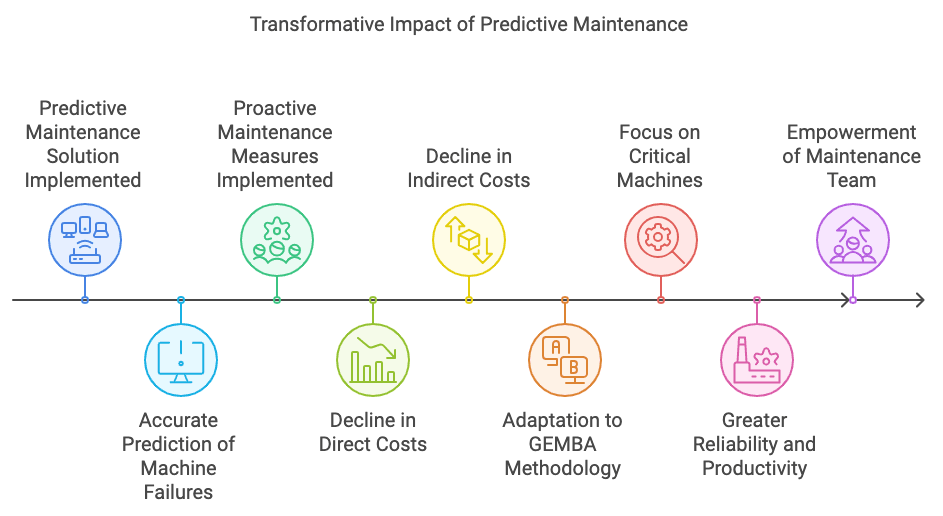
The impact of the predictive maintenance solution has been transformative, yielding significant improvements in cost savings, operational efficiency, and workforce empowerment. By accurately predicting and flagging potential machine failures in advance, Buff has been able to implement proactive maintenance measures that minimize unplanned downtimes and ensure an uninterrupted production flow. This shift has led to a sharp decline in direct costs associated with downtime, such as emergency repairs, idle production lines, and delayed shipments. The financial savings extend further to indirect costs, such as improved logistics planning and reduced penalties for missed deadlines. Adapting the algorithm to the GEMBA methodology has amplified these benefits, enabling maintenance teams to monitor Overall Equipment Effectiveness (OEE) more effectively. This targeted approach allows teams to focus on the most critical machines, ensuring that resources are directed where they will have the greatest impact. As a result, Buff has achieved greater reliability and productivity across its operations. Beyond the operational and financial gains, the solution has had a profound human impact within the maintenance department. With the predictive maintenance app and weekly automated reports, the maintenance team now begins their week with a clear understanding of potential risks, allowing them to integrate predictive insights into their planning. This has transformed their role from reactive troubleshooters to strategic planners. Instead of being overwhelmed by unforeseen issues, they can focus on preventing failures in critical areas, improving both their efficiency and job satisfaction. Additionally, the ability to identify and prioritize specific components of machines for maintenance has reduced the stress and guesswork typically associated with their responsibilities. The app’s user-friendly interface and explainable AI features empower team members, regardless of their technical expertise, to make informed decisions. This not only enhances individual productivity but also fosters a sense of ownership and collaboration within the team. Overall, the predictive maintenance solution has not only driven cost-effectiveness and reliability in Buff’s operations but has also elevated the role of the maintenance department, transforming it into a proactive and highly valued function within the organization. This human-centric approach has been as impactful as the technical advancements, fostering a more engaged, confident, and empowered workforce.
Words from our happy customer
"Collaborating with Desh (at Gott Data) has been a game-changer. Having someone who understands business processes on top of technical know-how, from conceptualization to ETL, development, and deployment, has been instrumental in our advanced analytics projects. Our custom-built predictive maintenance model predicts and flags machine failures, resulting in cost savings and uninterrupted production flow. I highly recommend Gott Data for any data-driven initiatives". Sergi Valero i Bover, CIO at Buff
Other Applications
Predictive maintenance (PdM) is revolutionizing industries by enabling real-time monitoring of equipment to predict and prevent failures before they occur. Across sectors such as manufacturing, energy, aviation, automotive, oil and gas, and healthcare, PdM is used to monitor critical machinery, detect early signs of wear or malfunction, and schedule maintenance proactively. This approach minimizes unplanned downtime, reduces repair costs, extends asset lifespan, and enhances safety. By leveraging sensors, AI, and data analytics, PdM helps optimize operations, improve efficiency, and lower operational risks, making it a key tool for businesses aiming to improve productivity and profitability.
Read more about how predictive maintenance can help your business here.
If this resonates with your business or organizational needs, drop us a line and we will be happy to help you!
For more information about our advanced analytics services: learn more
For other information: Visit our Website
Follow us on LinkedIn: Gott Data