A Microsoft Fabric consultant helps you set up Fabric so it fits how your company works: the right capacity size, a sensible workspace layout, data landing in OneLake, and Power BI reports that people can open without licence surprises. You need one when you're moving beyond a few Power BI reports into shared data, or when a trial has grown into something nobody planned. This post covers what that setup involves and how to pick someone to do it.
What is Microsoft Fabric, briefly?
Microsoft describes Fabric as an analytics platform for end-to-end data work: ingestion, transformation, real-time processing, analytics and reporting. It is delivered as software as a service. Its workloads include Data Factory, Data Engineering, Data Warehouse, Data Science, Real-Time Intelligence, Databases and Power BI.
Under all of them sits OneLake. Every Fabric tenant gets exactly one OneLake, built on Azure Data Lake Storage. Tables are stored in open formats, Delta Parquet or Iceberg, so the same data can be read by the warehouse, Spark notebooks and Power BI without copies.
When do you actually need a Fabric consultant?
Not every Power BI user does. A small team sharing reports on Pro licences can often carry on as it is. Bring in help when:
- Data comes from several systems and you want one governed copy instead of each report pulling its own extract.
- Many people only read reports, and you're weighing per-user licences against capacity.
- A Fabric trial is ending and workspaces, items and costs need sorting before you commit.
- You're moving from older tools, such as Power BI Premium P SKUs, which Microsoft is retiring in favour of Fabric F SKUs.
- Nobody owns governance yet: who can publish, who can see what, and how data is labelled.
What does a Fabric consultant set up?
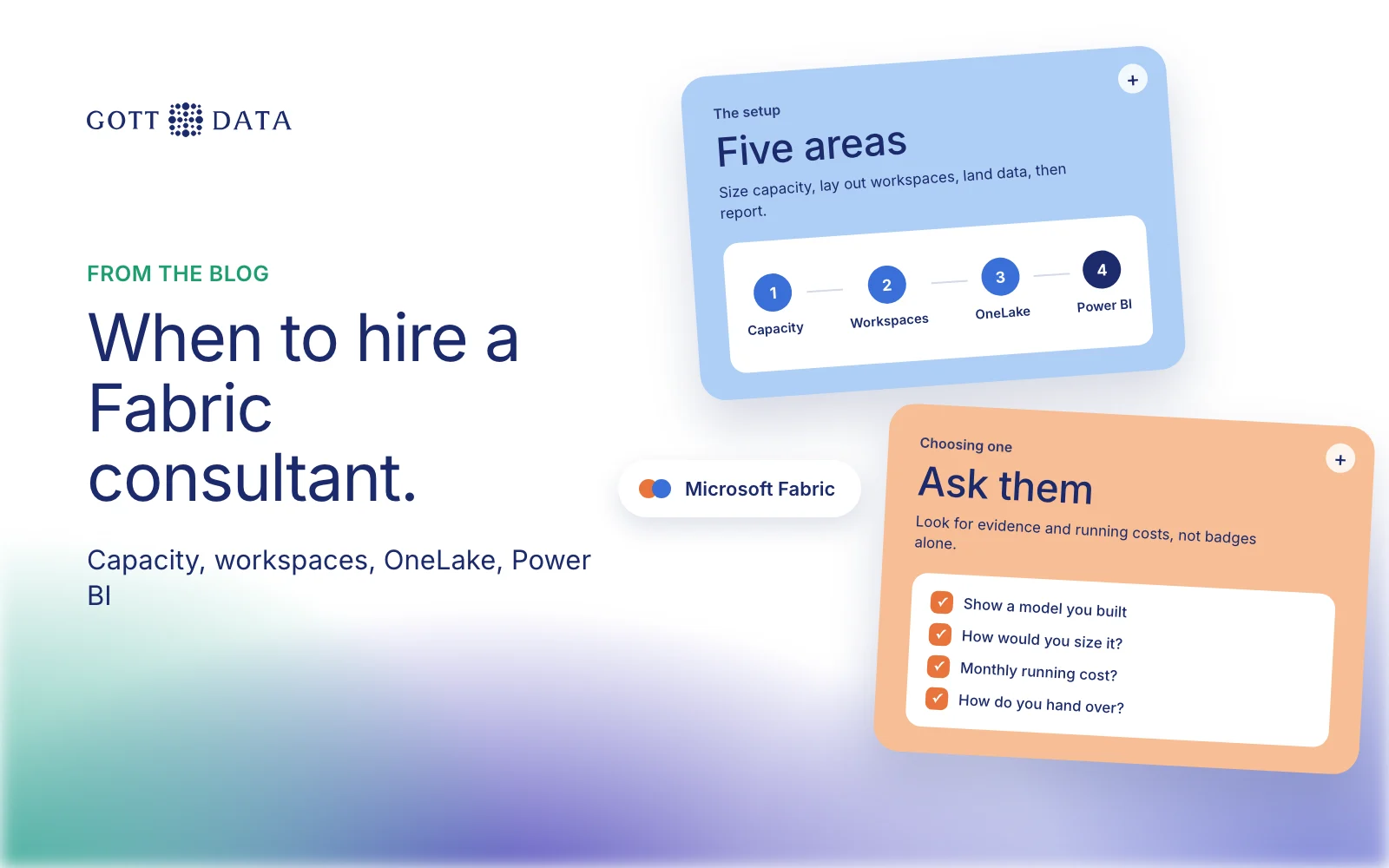
A typical first engagement covers five areas.
Capacity. Fabric runs on capacities, each a pool of compute measured in capacity units. F SKUs run from F2 upward and are bought through Azure, billed per second with no commitment, or reserved yearly for a lower rate. Pricing is regional. Size matters for licensing too: on F64 or larger, users with a free licence and a viewer role can open Power BI content. Below F64, each viewer needs Pro or Premium Per User.
Workspaces. Workspaces sit inside capacities and hold Fabric items such as lakehouses, warehouses, pipelines, notebooks and reports. A common layout separates development, test and production, and separates shared data from department reports. Each workspace can have its own admins.
OneLake and ingestion. Data arrives through Data Factory pipelines, mirroring of supported databases, or shortcuts. A shortcut points to data stored elsewhere, such as another workspace, Azure storage or Amazon S3, without copying it.
Power BI on top. Semantic models and reports read from OneLake. Direct Lake mode lets Power BI load large volumes from OneLake without making a copy. The consultant should also settle which models are shared and which are personal.
Security and governance. OneLake security roles can restrict access down to folders, tables, rows and columns, and those rules apply whether someone queries with SQL, Spark or a report. Sensitivity labels and Microsoft Purview add protection on top.
How do you choose a Microsoft Fabric consulting company?
Look for evidence, not badges alone. Ask:
- Show us a data model you built. Fabric is a toolbox. The hard part is still modelling your business correctly.
- How would you size our capacity? A good answer starts with your users, refresh schedules and data volumes, not a default SKU.
- What will it cost to run each month? Capacity, licences and storage should be estimated before any build.
- How do you hand over? You want documentation, named owners and training, so you aren't locked in.
- What would you not put in Fabric? An honest consultant will say when a simpler setup does the job.
Some firms advertise Microsoft partner status. That tells you about their relationship with the vendor. It doesn't replace references from a company your size.
What about Fabric consultant jobs and salaries?
People search for these too. Day rates and salaries vary widely by country and by whether someone is a contractor or employed. We don't publish figures we can't check. Local job boards and recruiter salary surveys give the clearest picture for your market.
Where we fit
We are not a Microsoft partner. We build data warehouses, pipelines and Power BI dashboards, and we'll tell you plainly if Fabric is the right home for your data or if something lighter would serve you better. Our analytics work shows how we approach it, and you can book a call to talk through your setup.